
Walking the Fine Line Between Market Response and Price Gouging
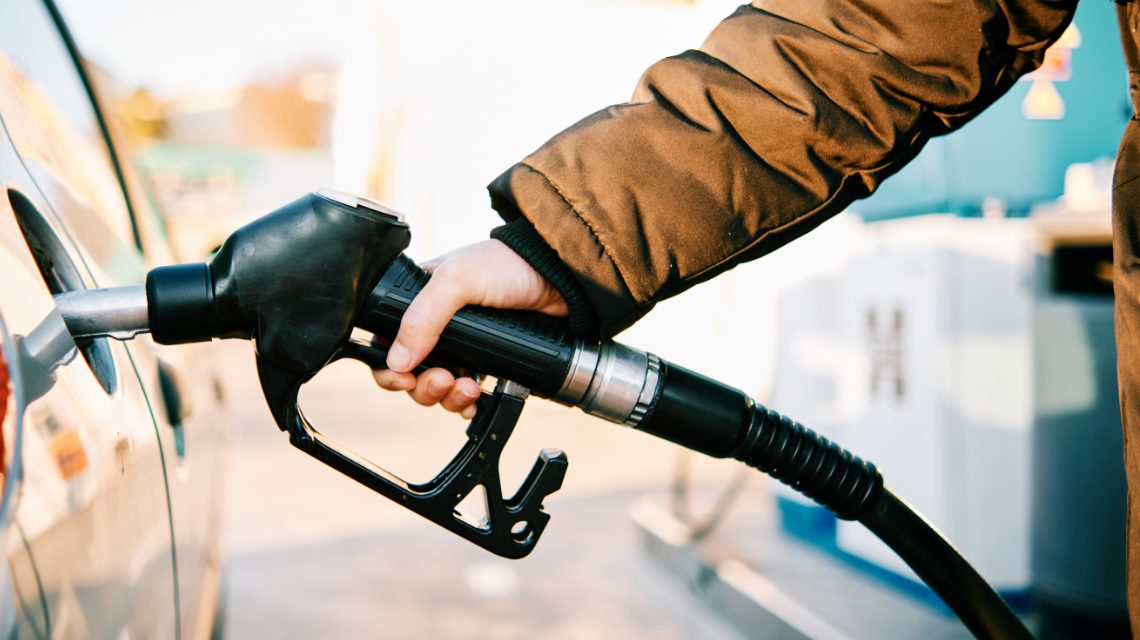
The Iran war has triggered what the International Energy Agency calls the “largest supply disruption in history,” sending U.S. gas prices to their highest levels since 2022. As of May 4, 2026, the national average for regular gasoline reached $4.46 per gallon, a sharp increase from under $3 a gallon before the conflict began on February 28.
The closure of the Strait of Hormuz, which handles 20% of global oil, has caused international benchmark Brent crude to trade at $105 to $120 a barrel. With a 44% increase in oil prices, gas retailers have a legitimate defense for higher prices at the pump.
When input costs rise, demand spikes, or supply chains are disrupted, businesses may raise prices in response to these market forces. However, there’s a fine line between market response and price gouging.
While the current spike in gas prices is largely driven by a supply shock, a similar increase during a natural disaster would likely be considered unconscionable. Businesses must navigate a patchwork of state laws and regulations and take preemptive action to protect themselves from price gouging allegations.
What Is Illegal Price Gouging?
When does a price increase cross the line into illegal price gouging? It largely depends on the state. While there is no federal law broadly prohibiting price gouging, 39 states, the District of Columbia, and four U.S. territories have statutes or regulations that prohibit it. The remaining states sometimes use unfair business practice or consumer protection laws to investigate and prosecute price spikes during emergencies.
For a price increase to be considered illegal price gouging, most state laws require three specific conditions:
- A declared emergency. Most laws only trigger once a governor, the president, or a local official declares a state of emergency. Common scenarios include a natural disaster or pandemic.
- Essential items. Prohibitions usually apply only to necessities such as food, water, fuel, medical supplies, and temporary housing.
- Unjustified increase. Prices must be grossly in excess of pre-emergency prices without a legitimate business justification.
However, states use different benchmarks to determine if a price hike is illegal. Some states set a strict limit. For example, California, New York, and Arkansas generally prohibit increases of more than 10% above pre-emergency levels. Other states use percentages as prima facie evidence of gouging. Alabama uses 25%, while Pennsylvania uses 20%. Some states, including Florida and Texas, prohibit “gross disparities” or “excessive” prices, leaving exact definitions to the discretion of courts.
What Are the Penalties for Price Gouging?
Most states treat price gouging as a civil matter. Civil fines vary widely depending on how the state categorizes price gouging and the objective of the law or regulation.
For example, Tennessee assesses a fine of $1,000 per violation or up to $5,000 for willful violations. Violators must also issue refunds to consumers who were overcharged. Price gouging is governed by the Tennessee Consumer Protection Act, which focuses on stopping the behavior and making consumers whole.
Iowa sets the fine as high as $40,000 and can force businesses to disgorge all profits made from the excessive pricing. The state classifies price gouging as a form of consumer fraud. The $40,000 per violation cap is designed to deter large corporations from treating gouging fines as a minor “cost of doing business.”
In a few states, price gouging can bring criminal penalties. Penalties for violating California’s price gouging law include up to one year in jail and fines of up to $10,000 per violation. In Missouri, price gouging can be charged as a Class D felony in certain cases. Florida assesses fines of $1,000 per violation, but sellers can be charged with a second-degree misdemeanor if they lack an appropriate business license.
How Is Price Gouging Investigated?
Most cases begin with an attorney general (AG) inquiry, a formal investigation that is almost always triggered by high volumes of consumer complaints. High-profile news stories about high prices can also lead an AG to open an investigation. Some states have specialized units that monitor wholesale and retail price data in real time. During large-scale crises, AGs may launch industry-wide investigations based on broader economic data.
An AG who decides to open an investigation will typically issue a Civil Investigative Demand (CID). A CID is a powerful subpoena that requires a business to produce extensive information, such as pricing data, wholesale invoices, and internal communications discussing price changes.
If the business is able to justify its price increases, the AG will close the inquiry with no further action. If the violation was minor or inadvertent, the AG may offer a settlement in which the business pays a small fine without admitting guilt. If the evidence shows a gross disparity in price with no cost justification, the AG will use the inquiry data as the foundation for a civil lawsuit or criminal indictment.
An inquiry is expensive and public. Responding to a CID often requires hiring specialized counsel to review thousands of documents. Some AGs publicly announce whom they are investigating. Businesses can be convicted in the court of public opinion before the legal process begins.
Avoiding a Price Gouging Investigation
Businesses frequently face investigations even when their actions are legitimate. Because terms such as “unconscionable” are subjective, a price that is reasonable to a business may seem excessive to consumers and state AGs. As a result, it’s critical to take proactive steps to avoid a price gouging investigation.
Price increases are justifiable if the business can prove that they are directly attributable to higher costs. Businesses should collect and retain all invoices, receipts, and supplier contracts to tie price increases to higher input costs. They should also keep records of non-supply factors, such as preexisting contracts, seasonal adjustments, and transportation, labor, and storage costs. In states that allow only a dollar-for-dollar pass-through, any price hike should be directly proportional to increased costs.
National and regional businesses navigate the patchwork of state price gouging laws by implementing multistate compliance frameworks rather than a single, universal pricing strategy. Because even small differences in state statutes can significantly impact legal risk, businesses must treat each jurisdiction as an independent regulatory environment.
A business may be subject to a state’s price gouging laws even if it does not have a physical location there. States often assert jurisdiction if the impact of a price increase is felt by their residents. A company must identify every state in which it sells, including states where products are merely delivered from an out-of-state hub.
Conclusion
The Iran war triggered increased scrutiny of potential price gouging as gasoline prices skyrocketed. However, it should not be considered a black swan event. As natural disasters increase in frequency, businesses may often find themselves in the crosshairs of state AG investigations. A few proactive steps can potentially save time, money, and reputational damage.
Gain a Better Understanding of State Laws Affecting Businesses
State AGs open civil investigations to enforce consumer protection, antitrust, and fraud laws. These investigations are often triggered by consumer complaints, whistleblower reports, or media coverage. Through the Executive Juris Doctor (EJD) curriculum at Purdue Global Law School, business professionals and leaders who do not intend to practice law can improve their understanding of these regulations. Individual online law courses are also available.
For professionals interested in practicing law, Purdue Global Law School offers an online JD program. Graduates of the JD program are academically eligible upon graduation to sit for the California or Connecticut bar or, with an approved petition, the Indiana bar.
Request more information today to find the path that works for you.